Ultimate Thermosystem
Three layers, no polystyrene
A thermal envelope for external walls, built from a mineral thermal plaster, a thermal primer and a coloured finish, and applied by hand or by plastering machine.
Layer 1: Thermoplast XR432
A polystyrene-free thermal plaster. Its design thermal conductivity is 0.0694 W/m·K, set by Standards Institution of Israel (SII) testing to Israeli Standard 5450, and the PELES thermal plaster system holds SII Standard Mark permits under Israeli Standard 1414 for external and internal insulation. PELES thermal plaster is classified A1 for reaction to fire under Israeli Standard 755, identical to EN 13501-1: non-combustible.
Layer 2: Thermocryl Primer
A water-based bonding primer with a gel of low thermal conductivity. It penetrates the substrate and gives the coloured coating a surface to grip, so the envelope works as a single layer.
Layer 3: Thermocryl Coat Ultra Light
An acrylic coloured coating with polyurethane binders and a thermal gel that slows the passage of heat through the wall by thermal mass. SII measured its thermal conductivity at 0.0526 W/m·K. It weighs 1 to 1.1 kg per litre, against 1.6 to 1.7 for the first generation, and meets Israeli Standard 1731.
Thickness and substrates
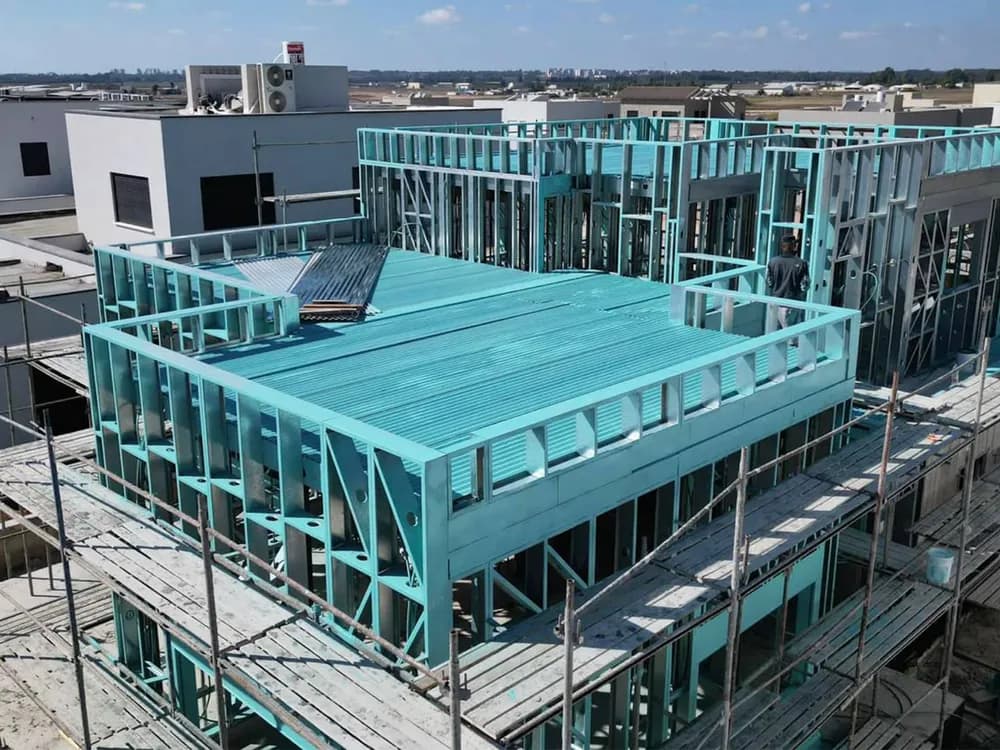
Plaster thickness is specified per climate zone by the local energy code; in Israel it ranges from 2 to 5 cm. The system suits block, concrete, drywall and steel-frame walls, in new construction and in renovation.